
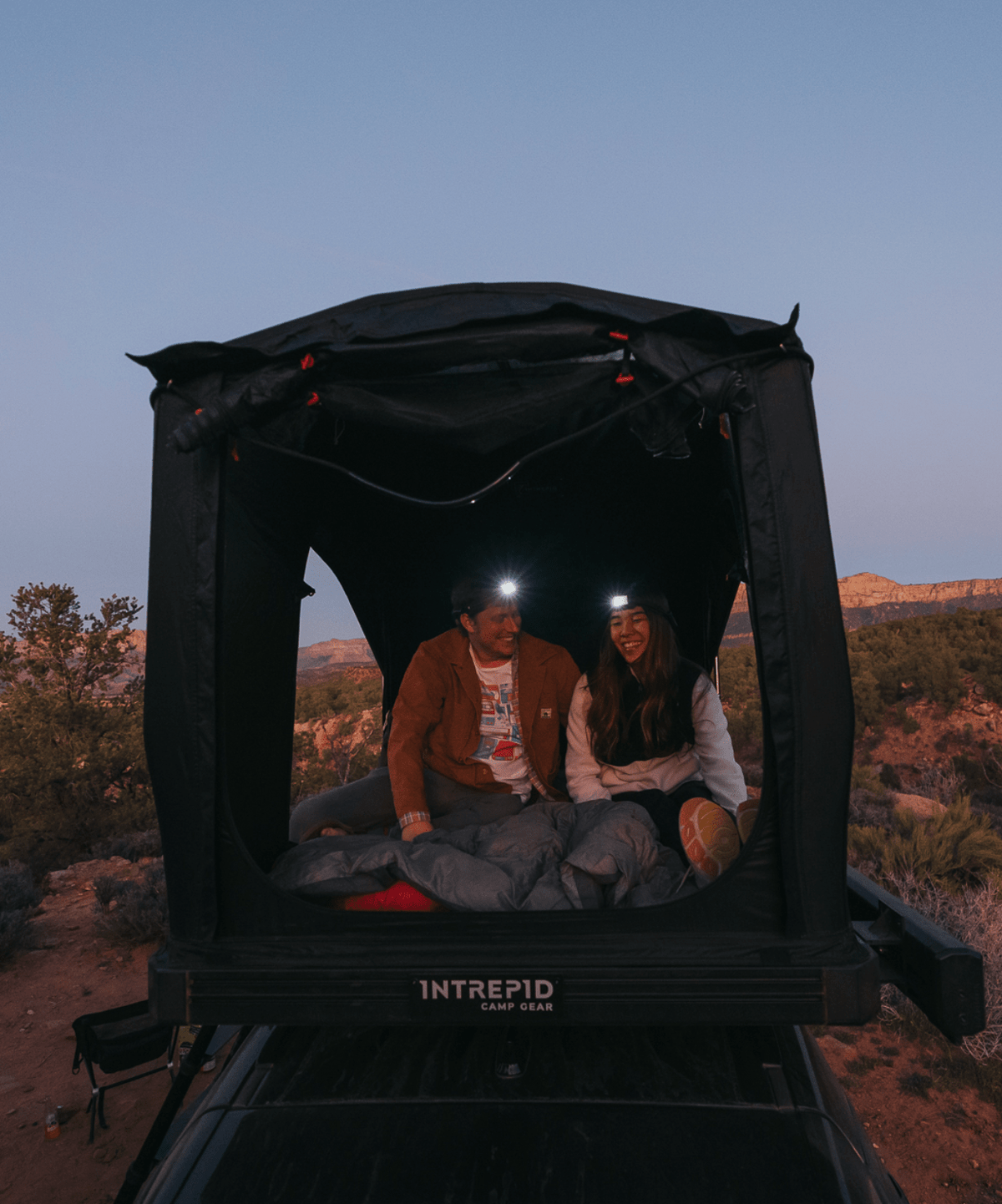
A Rivian is already built around carrying people and gear into places where a normal overnight stop can turn into a campsite. Adding a roof top tent makes that transition faster, but the right setup starts with compatibility, not tent size. Before choosing a roof top tent for your Rivian, look at where it will mount, how much the tent weighs, how many people need to sleep inside, and what else the vehicle needs to carry.
For most shoppers, the useful question is not “What is the biggest tent I can put on my Rivian?” It is “Which tent gives me enough sleeping space without creating unnecessary weight, height, or gear-management compromises?” That is the comparison this guide is designed to answer.
Rivian Roof Top Tent Recommendations at a Glance
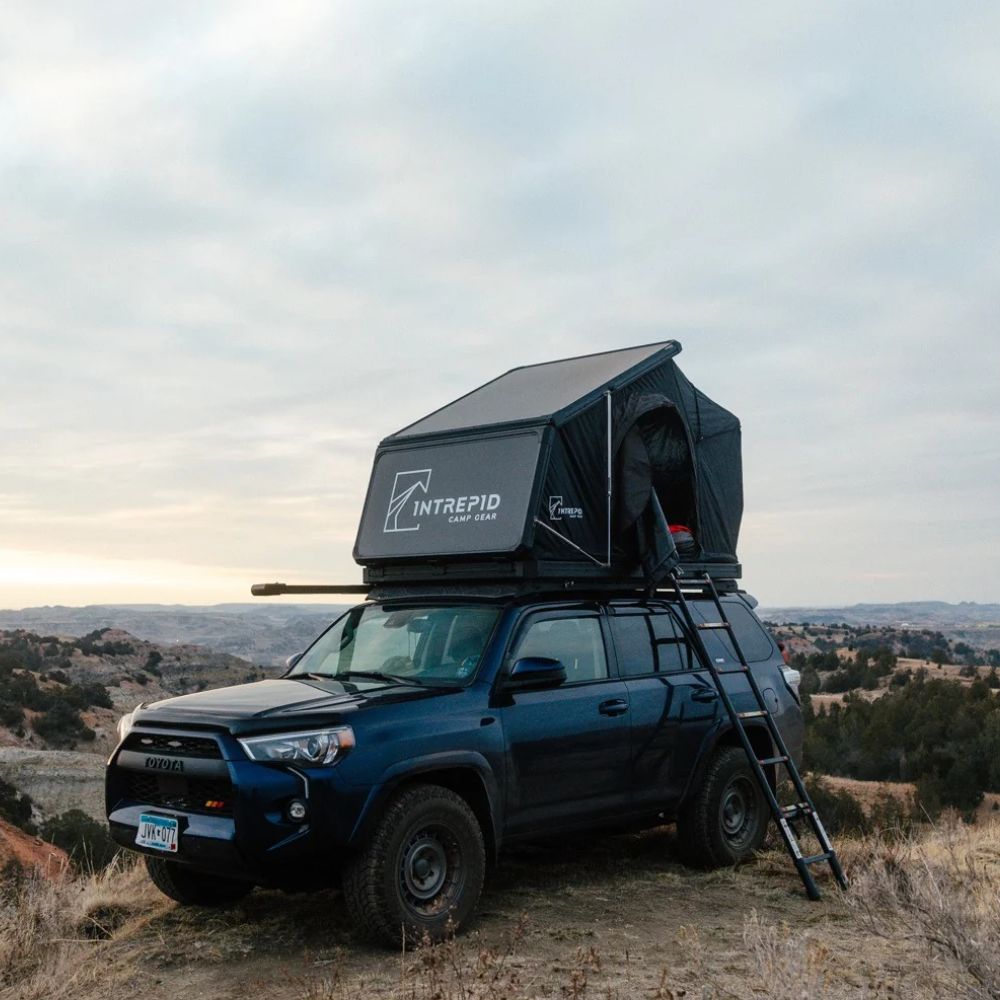
Within the Intrepid Camp Gear lineup, three sizes make sense to compare for a Rivian build. All use the low-profile hard-shell GEO format, but each solves a different space problem.
GEO SOLO: A one-person option that leaves substantially more roof or rack width available for additional gear.
-
Tent weight: 120 lbs
-
Tent dimensions: 88.5 x 33.5 x 7 inches closed
GEO 2.0: A two-person tent with a 48.5-inch-wide interior sleeping area and a 2-inch mattress.
-
Tent weight: 152 lbs
-
Tent dimensions: 88.5 x 50.5 x 7 inches closed
GEO 2.5: A two-person tent with a bit more wiggle room. Includes a 53-inch-wide interior sleeping area and a 2.5-inch mattress.
-
Tent weight: 155 lbs
-
Tent dimensions: 88.5 x 55 x 7 inches closed
GEO 2.5 PRO: An elevated 2-person tent, complete with extra space, a 53-inch-wide interior, 2-inch mattress, rear door awning, and diesel-heater/AC port to beat the elements.
-
Tent weight: 165 lbs
-
Tent dimensions: 88.5 x 55 x 7 inches closed
See all current Intrepid Camp Gear roof top tents before deciding which footprint makes sense for the complete build.
Rivian Tent Fit Checklist
-
Confirm the vehicle and mounting-system limits for the exact model, model year, and configuration.
-
Choose the smallest sleeping capacity that comfortably fits the people using the tent.
-
Add the tent, brackets, rack hardware, and other mounted gear when reviewing the moving load.
-
Confirm at least the tent manufacturer’s required crossbar or mounting-point spread and compatible bracket geometry.
-
Check whether the tent blocks or conflicts with other roof- or bed-mounted equipment.
-
Measure the finished vehicle height after installation and keep that number in the vehicle.
Roof Top Tent Considerations for a Rivian
Total Vehicle Height and Tent Weight
A roof top tent changes two things you notice every day: what the vehicle carries and how tall the vehicle is. Intrepid’s current GEO SOLO, GEO 2.0, and GEO 2.5 & 2.5 Pro are all 7 inches high when closed, before accounting for the rack or crossbar system underneath. That means your final clearance is the vehicle height plus the mounting system plus the tent. Measure the completed setup rather than relying on a tent-only specification.
Weight deserves the same system-level view. The tent is only part of the moving load. Crossbars, brackets, awnings, recovery gear, storage, or anything else attached to the same system also matters. We instruct owners to check the system capacity and the original vehicle maker’s roof-rail limit. If you cannot verify a component’s rating, do not assume another stronger component makes up for it.
Number of Sleepers
Solo Roof Top Tent
The GEO SOLO is the purpose-built choice when one person needs a full-length sleeping space but the build also needs room for equipment. Its 33.5-inch exterior width is far narrower than the two-person models, while its 86.5-inch interior length is designed to accommodate one adult over six feet tall. For a vehicle carrying bikes, skis, recovery equipment, or a separate cargo solution, that narrow footprint can be more valuable than unused mattress width.
Two-Person Roof Top Tent
The GEO 2.0 is the middle option. Its 50.5-inch exterior width and 152-pound weight make it smaller and lighter than the GEO 2.5 & 2.5 Pro, while the 48.5-inch interior width gives two campers a dedicated sleeping platform. It retains the 60-second setup and hard-shell format, but does not add the Pro model’s rear awning or heater/AC port. Choose it when two-person sleeping space matters more than cold-weather or extended-trip accessories.
2.5-Person Roof Top Tent
The GEO 2.5 and GEO 2.5 Pro share a 55-inch exterior width and 53-inch-wide interior, giving two campers more room to spread out than the GEO 2.0. The non-Pro GEO 2.5 weighs 155 pounds and includes a thicker 2.5-inch mattress, making it a strong choice when added sleeping comfort matters more than specialized accessories. The GEO 2.5 Pro weighs 165 pounds and uses a 2-inch mattress, while adding a rear door awning and diesel-heater/AC port for longer trips or changing conditions. Both models require more rack capacity and roof or bed space than the GEO 2.0, so choose between them based on whether you prioritize mattress comfort or the Pro model’s integrated features.
Other Roof-Mounted Gear
Create a roof-space plan before choosing the tent. Write down every item that needs to live above the vehicle or bed: skis, boards, bikes, recovery boards, awning brackets, cargo cases, or accessory crossbars.
Then compare the tent’s exterior width and opening path with the usable rack area. The GEO SOLO is designed specifically to preserve room for larger gear; moving up to a 50.5- or 55-inch-wide tent naturally reduces that remaining space.
Roof Rack and Crossbar Compatibility
We recommend heavy-duty aftermarket crossbars and a minimum 36-inch distance between crossbars or mounting points for stability while driving. The GEO 2.5 guide specifies a minimum 176-pound dynamic crossbar rating and instructs owners to account for other accessories while staying within the original vehicle maker’s roof-rail limit. Platform racks can work, but some systems require alternate rails or brand-specific mounting hardware.
Treat those numbers as tent-side requirements, not permission to exceed the Rivian’s own limits. The vehicle, rack, crossbars, brackets, and tent all have to be compatible at the same time.
Why a Rivian Works Well for Rooftop Camping
A Rivian build benefits from having useful vehicle storage separate from the sleeping platform. That lets the roof top tent do one job well: provide a ready-to-open shelter while clothing, food, recovery equipment, and camp-kitchen gear stay organized elsewhere. With the tent closed to a 7-inch profile, the GEO line also keeps the shelter compact between camps compared with carrying a full ground-camp setup inside the cabin.
For R1T owners, mounting location is another planning decision because the truck format can create different rack layouts than an SUV. Do not choose between roof and bed placement based only on appearance. Compare the documented rating of the actual mounting system, final vehicle height, bed access, rear visibility, tent opening direction, and whether the ladder lands where you can use it comfortably.
How to Choose the Right Rooftop Tent for Your Rivian
For Weekend Camping
For a one- or two-night trip, simplicity usually wins. A SOLO makes sense for one camper who carries activity gear. The GEO 2.0 is the more direct two-person choice when the goal is a quick sleeping platform without paying a weight or space penalty for features you will rarely use. Both use the same 60-second setup claim published by Intrepid, so size and capacity should drive the choice more than setup speed.
For Overlanding and Longer Trips
Longer trips expose small annoyances: wet entries, crowded sleeping space, and gear that has no dedicated place. For that use, the GEO 2.5 Pro’s wider interior and rear awning become more meaningful. The right answer still depends on your payload plan. A larger tent should not force essential recovery or storage equipment into a worse location.
For Winter Activities
For ski trips and shoulder-season travel, prioritize a compact closed profile, a dry entry routine, and enough interior space to keep sleep gear organized. The GEO 2.5 Pro adds a dedicated diesel-heater/AC port; the GEO SOLO and GEO 2.0 do not list that Pro feature. A heater port organizes routing, but it does not replace the heater manufacturer’s operating, ventilation, and carbon-monoxide instructions.
Does a Rooftop Tent Affect Rivian Range?
Any exterior cargo can change an EV’s energy use because the vehicle is moving additional mass and, depending on placement, presenting a different shape to the airflow. There is not one defensible percentage to apply to every Rivian roof top tent setup. Tent profile, rack height, mounting position, speed, wind, temperature, tires, route, and other cargo can all change the result.
The practical approach is to establish your own baseline. Compare the vehicle’s energy-consumption display on a familiar route before and after installing the tent under similar conditions, then use the loaded result when planning charging stops. That gives you a number tied to your actual vehicle and build rather than a generic estimate.
Frequently Asked Questions
Do you need a roof rack for a rooftop tent?
Yes. A rooftop tent requires a compatible rack, crossbar, or platform mounting system with documented capacity and suitable mounting geometry. Intrepid’s GEO tents do not include crossbars.
Can you put a rooftop tent on a Rivian?
A Rivian can use a rooftop-tent setup when the specific vehicle, rack, crossbars, tent, and hardware are mutually compatible and remain within their published limits. Verify the current Rivian documentation for the exact configuration rather than relying on a universal Rivian rating.
Does a rooftop tent affect a Rivian’s range?
Exterior cargo can affect EV energy consumption, but there is no single accurate range-loss percentage for every setup. Compare consumption before and after installation on a familiar route and plan charging from the loaded result.
Where should you mount a rooftop tent on a Rivian: the roof or truck bed?
For an R1T, choose the location by comparing the actual mounting-system rating, final height, bed access, tent opening direction, and ladder placement. For an R1S, the relevant setup is roof-mounted. Always verify the vehicle and rack documentation for the configuration.
Build the Rivian Setup Around How You Travel
The most useful Rivian tent is not automatically the largest. Start with the people who need to sleep in it, reserve space and capacity for the gear that makes the trip possible, and verify every mounting limit. Once those pieces are clear, the choice between the GEO SOLO, GEO 2.0, and GEO 2.5 Pro becomes much easier.
Share: