

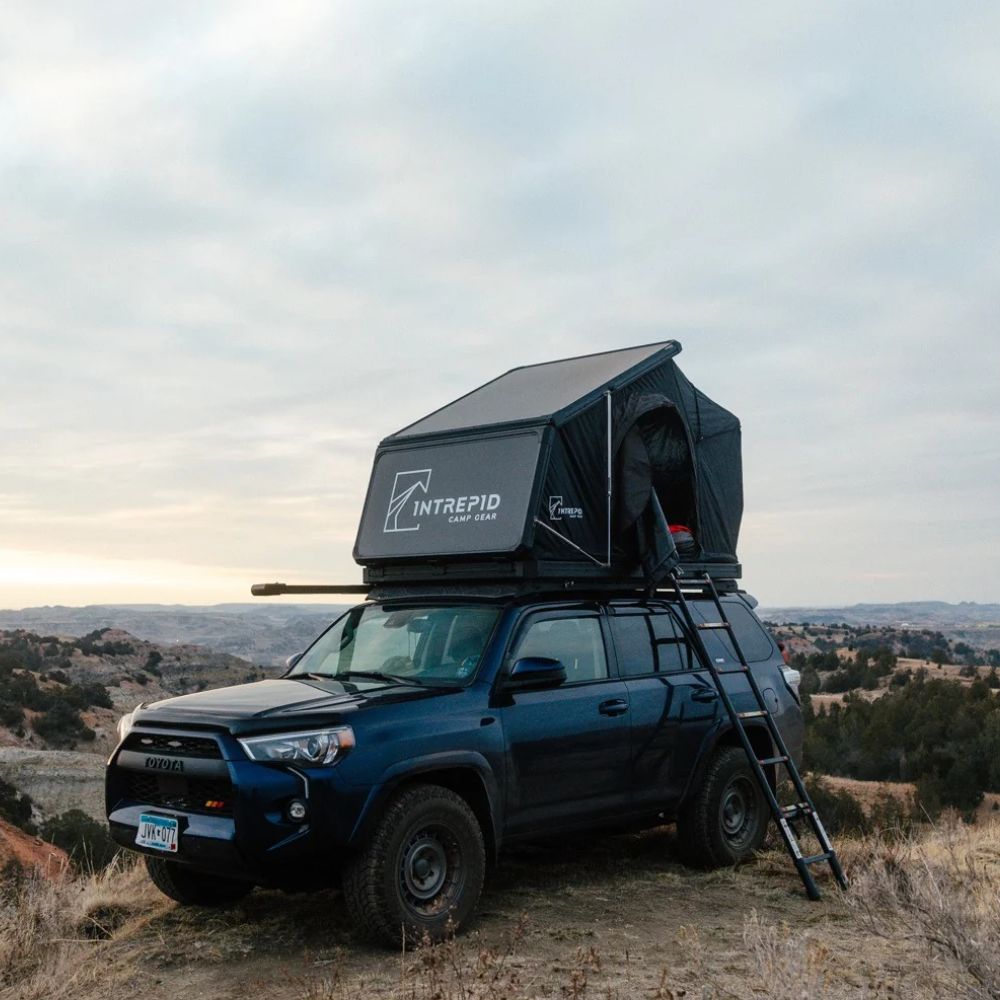
A Toyota 4Runner gives you a useful mix of enclosed cargo space and an expansive roof, which is why roof top tents are such a natural fit for this platform. But “fits a 4Runner” is not enough information to buy a tent. The safe and useful setup depends on the 4Runner model year and trim, the rack or crossbars on the vehicle, the tent’s weight and mounting geometry, and the rest of the gear you plan to carry.
Choosing the best rooftop tent for a 4Runner means evaluating the entire setup, not just the tent. First verify what the vehicle and rack can carry. Then choose the sleeping capacity and features that actually improve your trips, rather than starting with the largest tent available.
Best 4Runner Roof Top Tents: Quick Comparison
GEO SOLO: A one-person option that leaves substantially more roof or rack width available for additional gear.
-
Tent weight: 120 lbs
-
Tent dimensions: 88.5 x 33.5 x 7 inches closed
GEO 2.0: A two-person tent with a 48.5-inch-wide interior sleeping area and a 2-inch mattress.
-
Tent weight: 152 lbs
-
Tent dimensions: 88.5 x 50.5 x 7 inches closed
GEO 2.5 PRO: An elevated 2-person tent, complete with extra space, a 53-inch-wide interior, 2-inch mattress, rear door awning, and diesel-heater/AC port to beat the elements.
-
Tent weight: 165 lbs
-
Tent dimensions: 88.5 x 55 x 7 inches closed
All three are listed at 88.5 inches long and 7 inches high when closed. The meaningful differences are width, weight, sleeping space, and the Pro model’s added camp features.
4Runner Roof Top Tent Fit Checklist
-
Identify the exact 4Runner model year and trim.
-
Confirm the vehicle roof or roof-rail limit in the Toyota owner documentation.
-
Confirm the exact rack or crossbar system’s dynamic and static ratings.
-
Add tent, brackets, rack components, and other roof-mounted gear to the load plan.
-
Verify Intrepid’s required crossbar or mounting-point spread and bracket geometry.
-
Check hatch, antenna, tent hinge, ladder, awning, and accessory clearances.
-
Measure final vehicle height after installation.
Roof Top Tent Considerations for a Toyota 4Runner
Total Vehicle Height and Weight
Start with the completed vehicle, not the tent specification in isolation. A 7-inch-closed tent will sit on top of whatever rack or crossbar system you use. Measure from the ground to the highest point after installation, with normal tire pressure and the vehicle on level ground. That is the number that matters at garages, trail obstacles, and other height restrictions.
For load planning, add the tent and every other component carried by the roof system. A rack rated for a heavy load does not automatically raise the 4Runner’s own allowable roof load, and a strong vehicle roof does not make an underrated crossbar acceptable. Use the lowest applicable published limit in the complete mounting chain.
Number of Sleepers
Solo Roof Top Tent
One camper does not need to dedicate most of a 4Runner roof to sleeping space. The 33.5-inch-wide GEO SOLO preserves more lateral room for long gear while still providing an 86.5-inch interior length. For a ski, bike, fishing, or hunting build, that narrower footprint can keep the roof useful instead of turning the tent into the only thing the rack can carry.
Two-Person Roof Top Tent
The GEO 2.0 is a more conventional two-person choice. At 50.5 inches wide externally and 152 pounds, it uses less width and weighs less than the GEO 2.5 Pro. The 48.5-inch-wide interior and 2-inch mattress make it a straightforward choice for couples or two-person weekend trips where you want a full hard-shell shelter without the Pro model’s additional features.
2.5-Person Roof Top Tent
The GEO 2.5 Pro expands the interior to 53 inches wide and adds a rear door awning plus a diesel-heater/AC port. It weighs 165 pounds. That extra width is useful for campers who value more sleeping room or spend longer periods in the tent, but it reduces the roof space available to other gear and demands more from the rack system.
Other Roof-Mounted Gear
A 4Runner build often asks the roof to do several jobs at once. Before ordering a tent, sketch the rack from above and assign space to the tent, awning brackets, boards, cargo case storage, bikes, skis, or accessory crossbars. Check both closed and open tent positions. A bracket that fits beside a closed shell can still interfere with the hinge, roof panel, ladder, or doorway once camp is set.
If rooftop storage is a priority, review Intrepid Camp Gear cargo cases as part of the same layout rather than treating storage as an afterthought.
Roof Rack
We recommend heavy-duty aftermarket crossbars, a minimum 36-inch crossbar or mounting-point spread, and enough dynamic capacity for the tent plus any other equipment. The GEO 2.5 guide lists a minimum 176-pound dynamic crossbar rating while also directing owners to remain within the original car maker’s roof-rail limit. Platform racks can be used, but note that systems such as Prinsu or Pioneer may require alternate rails or brand-specific installation hardware.
That’s why we can’t give a blanket yes when customers ask whether a factory rack will work. “Factory rack” can refer to different rails and crossbars across 4Runner years and configurations. Use the Toyota documentation for your exact vehicle and the specifications for the exact rack components installed. If the relevant rating or mounting compatibility is not documented, upgrade to a system that is explicitly rated for the application.
Why the Toyota 4Runner Is a Strong Rooftop-Camping Platform
A roof top tent separates sleeping space from the 4Runner’s enclosed cargo area. That is useful on real trips: bedding can stay dedicated to the tent while food, tools, clothing, and activity gear remain protected inside the vehicle. The result is a more repeatable camp routine because you are not unloading the entire cargo area just to create a place to sleep.
The 4Runner also supports a broad aftermarket ecosystem of racks and platforms, which gives owners multiple ways to build around a tent.
How to Choose the Right Rooftop Tent for Your 4Runner
For Weekend Camping
For frequent Friday-to-Sunday trips, choose for speed and simplicity. One camper with substantial gear benefits from the SOLO footprint. Two campers who primarily need a comfortable sleeping platform can use the GEO 2.0 without adding the Pro model’s width and weight. Both list 60-second setup times, which keeps camp setup from dominating a short trip.
For Overlanding and Longer Trips
When the 4Runner is carrying recovery equipment, water, food, tools, and camp furniture, every mounting decision affects another. A larger tent may improve sleep but take away a useful mounting zone. The GEO 2.5 Pro makes the strongest case when its 53-inch-wide interior and rear awning solve problems you actually encounter. If your rack plan becomes crowded, a narrower tent and better-organized cargo may be the smarter overall build.
For Winter Activities
Skiing and shoulder-season travel put a premium on quick setup and organized wet gear. Keep skis or boards out of the sleeping area when possible, leave a clear path to the ladder, and account for snow or ice before opening or closing the tent. The GEO 2.5 Pro’s dedicated heater/AC port can simplify heater-hose routing, but any heater still has to be operated according to its manufacturer’s safety and ventilation instructions.
Frequently Asked Questions
Do you need a roof rack for a rooftop tent?
Yes. The tent must attach to a compatible rack, crossbar, or platform system. Intrepid GEO tents include mounting brackets but do not include crossbars.
Will a rooftop tent fit every 4Runner generation?
Not automatically. Roof design, rails, racks, dimensions, and manufacturer limits can vary by model year and configuration. Match the rack to the exact 4Runner, then match the tent to that rack.
How heavy can a rooftop tent be on a Toyota 4Runner?
There is not one responsible number for every 4Runner configuration. The allowable tent weight is constrained by the lowest applicable rating among the vehicle, roof rails, rack or crossbars, mounting hardware, and the rest of the roof load.
Can you put a rooftop tent on a 4Runner factory roof rack?
Only when the exact factory components have documented capacity and mounting geometry that satisfy both Toyota’s limits and the tent requirements. If those specifications cannot be verified, use a properly rated compatible rack rather than assuming the factory system is sufficient.
Build the 4Runner Around the Trip, Not the Tent
A good 4Runner setup still leaves the vehicle useful after the roof top tent is installed. Verify the mounting system first, choose the smallest sleeping footprint that meets your needs, and reserve capacity and space for the gear that gets you to the campsite in the first place.
Compare the current Intrepid Camp Gear roof top tent lineup once your rack and load plan are clear.
Share: