

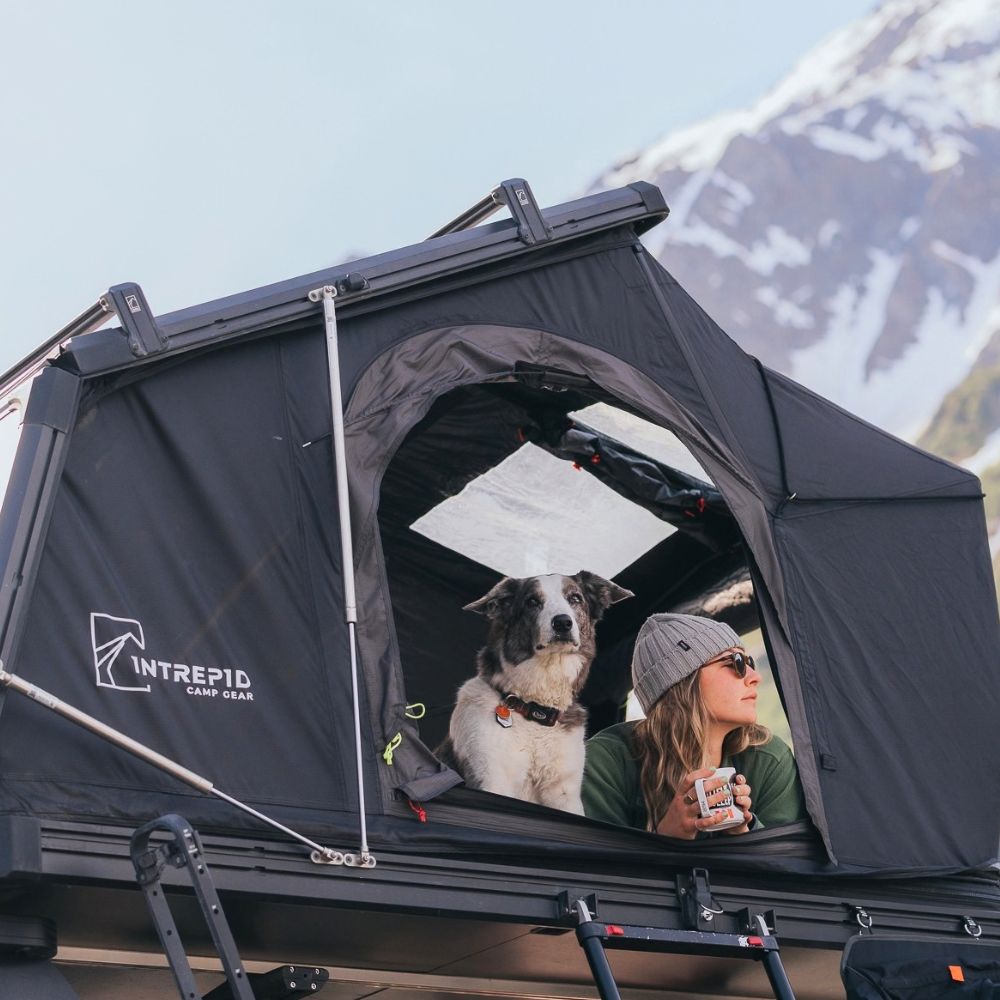
Transitioning to vehicle-based exploration shifts the dynamic of traveling with your canine companion. Managing these tips for camping with dogs on off-grid expeditions requires intentional planning from payload limits and structural safety to gear logistics and trail prep.
Master the Mechanics of Elevated Access
While navigating the ladder to a vehicle-mounted rooftop tent can initially intimidate dogs-especially since standard open-rung telescopic ladders often cause discomfort and hesitation for canine paws-spacious, pet-friendly hardshell shelters like the GEO 3.0 make the climb worthwhile by providing ultimate comfort and resting space for both you and your furry companion once you're inside.
| Access Method | Best Suited For | Pros | Cons |
|---|---|---|---|
|
Standard Telescopic Ladder |
Agile, medium-to-large breeds |
Lightweight, compact storage |
Requires intense training; harsh on joints |
|
Non-Slip Ladder Cover |
All dogs |
Protects paw pads, improves traction |
Requires manual installation/removal |
|
Canine Ramp / Platform Bridge |
Heavy or senior dogs |
Zero vertical joint stress |
Bulky transport footprint, takes up storage space |
Train your dog at home to climb safely, or utilize non-slip ladder covers as well as specialized pet steps to protect their paw pads and prevent joint strain. Never force an untrained dog up a ladder. Secure them with a robust harness and guide them step-by-step until vertical mobility becomes second nature.
Essential Gear Checklist for Dog Overlanding

Trail ready with your favorite co-pilot
Equipping your vehicle with specialized canine gear ensures that your dog remains comfortable, clean and safe throughout remote expeditions. Organization is critical when maximizing storage space inside an overlanding rig.
-
Feeding Systems: Pack your dog’s regular food in airtight containers to prevent digestive distress, and carry collapsible, lightweight bowls alongside tip-proof water dispensers secured using Rapid T-Slot Loops on your vehicle's channels.
-
Trail Clean-up Hygiene: Bring a dedicated set of heavy-duty dog wipes for muddy paws and fur, extra waste bags, and a couple of old towels to manage wet conditions before entering your shelter.
-
Pet Safety Equipment: Equip your dog with a secure harness, a short or 2-meter extension lead, a collar light for low-visibility night conditions and an up-to-date ID tag alongside an active microchip.
-
Thermal Comfort Gear: Pack a familiar crate mat, a waterproof jacket or cooling vest depending on ambient climate zones, and a pet-safe heated pad for sub-zero camping nights.
Managing Tent Space Hygiene
Sharing a compact rooftop tent with a medium or large dog requires smart interior modifications. Protect your sleeping setup from sharp claws using heavy-duty, puncture-resistant mattress protectors and durable foam pads. Always wipe paws and brush fur before entry to manage dirt, burrs and ticks.

Keep your rooftop tent clean on every adventure
Regulate tent temperature through cross-ventilation, and secure all entry zippers with internal safety tethers to prevent accidental nighttime exits. To soothe their anxiety in an unfamiliar elevated environment, bring your dog's familiar crate mat or blanket inside the shelter; this familiar scent will calm them down and significantly reduce restless pacing.
Pre-Trip Dog Camping Health Preparation

Get your pup adventure-ready with a health check
Before hitting remote off-grid trails, preparing your dog’s physical readiness and health infrastructure is just as critical as prepping your vehicle.
-
Medical Fitness Check: Schedule a pre-trip veterinarian checkup to ensure vaccinations, microchips, and regional parasite treatments (flea, tick, and heartworm) are fully up to date. Research local wildlife risks and toxic flora unique to your destination.
-
Emergency Readiness: Pack a dedicated canine first-aid kit containing wound wash, styptic powder and paw-safe bandages. Always identify and log the nearest veterinary clinic before venturing into deep remote sectors.
-
Routine Consistency: Maintain regular feeding schedules, hydration milestones and sleep routines. Familiarity keeps stress levels low in unfamiliar wilderness environments.
Establish Ground Level Dog Infrastructure
While your elevated shelter serves as your vertical sleeping quarters, your dog will spend the daylight hours at ground level around your rig. Setting up an efficient basecamp infrastructure prevents trail fatigue and dehydration by utilizing the Crosswing Awning or ground annexes to create a shaded, secure micro-zone beneath or beside your rack system, keeping your pet safely out of direct UV exposure and heavy wind shear.

Intrepid x Kammok Crosswing Awning
At the same time, off-grid overland sites present unpredictable wildlife risks and changing terrain that require robust boundary management. Establish a heavy-duty ground tether system or portable fencing rated for your vehicle’s recovery points to secure your dog, ensuring they remain contained within your rig’s immediate perimeter while you deploy awnings, organize drawer modules or operate heavy recovery gear.
Overlanding with a canine companion demands the same rigorous attention to detail as any other piece of expedition gear, making these practical tips for camping with dogs essential for every off-grid adventurer. By conditioning your dog for elevated access, organizing your gear loadout, and fortifying your shelter setup, you establish a resilient foundation for the wild. Equip your vehicle with Intrepid Camp Gear infrastructure, secure your companion, and push further off-grid with absolute confidence.
Share: