

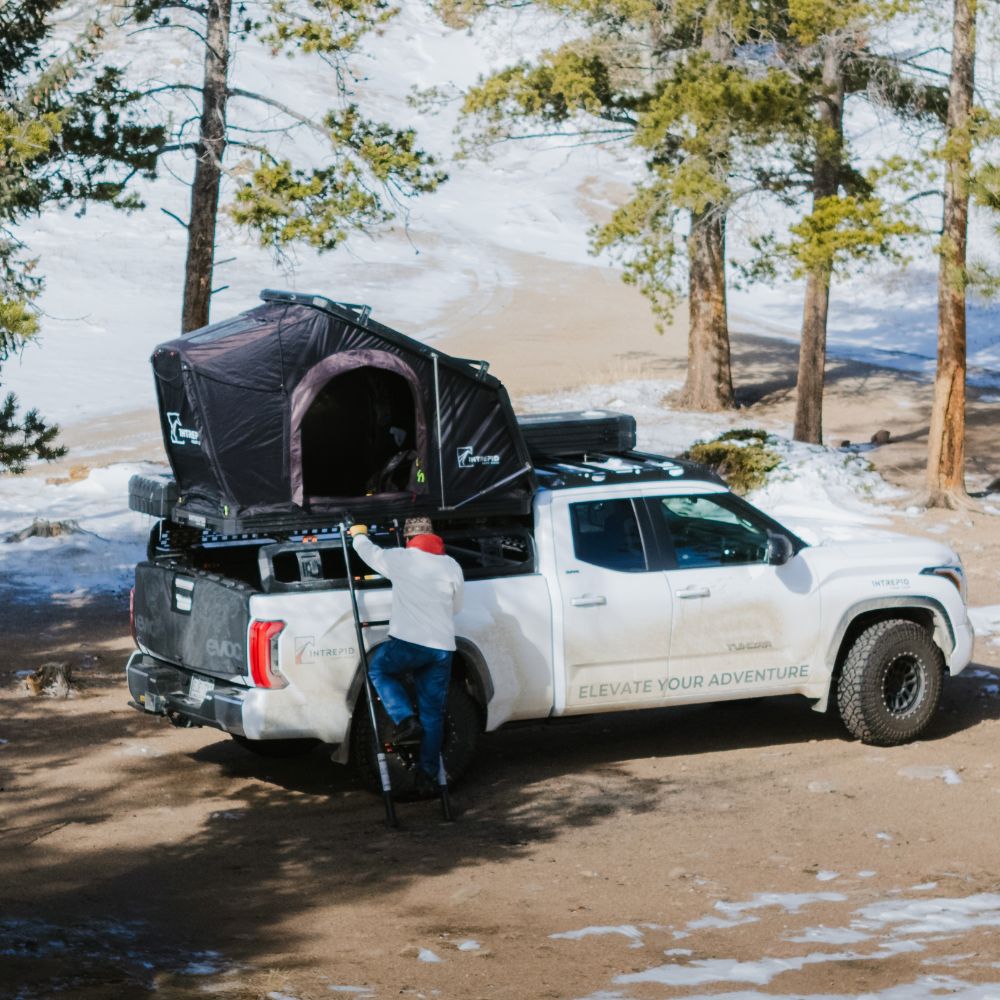
Cold weather empties the trails, but winter camping leaves no room for guesswork. Operating off-grid in freezing conditions requires clear protocols for snow safety, proven heat-retention tips, and an essential gear list anchored by a reliable shelter system. With the right vehicle setup and preparation, you eliminate winter friction and gain the confidence to stay out year-round.
How to Setup Camp for Winter Camping?

GEO 2.5 Pro Rooftop Tent
Pitching camp in winter conditions introduces physical variables that ground tents struggle to manage: frozen sub-soil, snow accumulation, and severe ground heat loss. A functional winter setup relies on elevated, stable shelter infrastructure - specifically a hard-shell rooftop tent system - to bypass ground-level thermal bridging, streamline sub-zero deployment and maintain precise climate control.
-
Site selection: Park facing prevailing winds behind natural windbreaks, avoiding damaged or snow-laden tree limbs. Position clear of avalanche runout zones, maintain visual landmarks for whiteout navigation, orient east for morning solar heat gain, verify nearby water sources to conserve melting fuel and camp on deep snow or bare ground to protect winter vegetation.
-
Elevated shelter stability: Ground tents require tedious snow trenching and specialized deadman anchors. A hard-shell rooftop tent bypasses frozen ground entirely, providing a level, rigid sleeping platform that deploys in under 60 seconds regardless of snow depth.
-
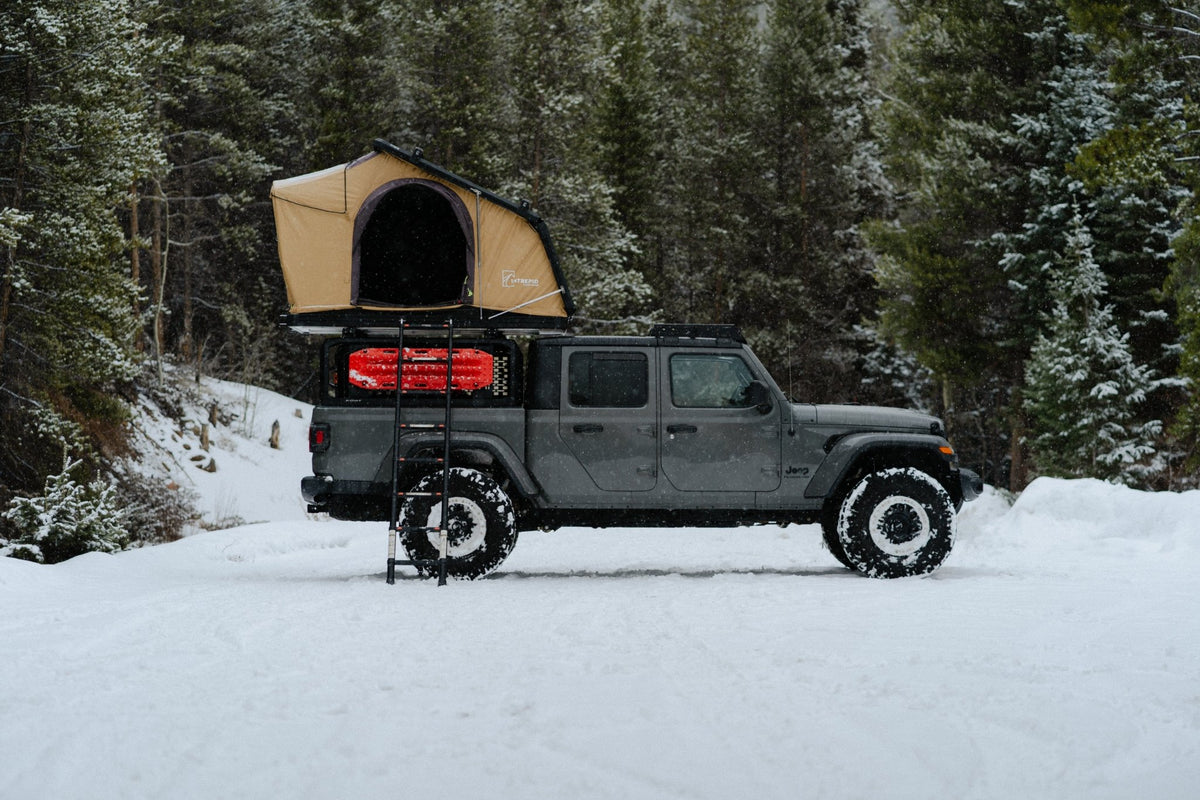
Snow load: Heavy snowfall creates static weight on tent canopies. The Intrepid GEO Pro features a high-density aluminum frame and an aggressive shell pitch that force snow to shed naturally, preventing structural sagging under overnight snow accumulation.
-
Climate control: Elevating your sleeping quarters away from frozen terrain cuts conductive heat loss. Through the GEO Pro’s diesel heater port, an external diesel heater channels forced warm air inside without unzipping doors, while its custom thermal liner traps dry heat and eliminates interior wall frost.
Essential Winter Camping Gear
Achieving consistent thermal comfort during severe winter camping requires moving beyond passive sleep gear. While a high-quality, cold-rated sleeping bag is essential, relying solely on personal insulation leaves you vulnerable to ambient heat loss and interior frost. True climate control in sub-zero environments relies on active thermal management and structural insulation.
Tent
Comparing performance factors reveals how a hard-shell rooftop tent system resolves the structural, thermal, and operational limitations of traditional ground shelters during winter camping.
| Factors | Traditional Ground Tent | Hard-Shell Rooftop Tent |
|---|---|---|
|
Sub-Soil Contact |
Direct ground placement causes aggressive conductive heat loss into frozen terrain and ice. |
Suspended design creates an air gap above the snow, completely eliminating ground-level thermal bridging. |
|
Anchor Infrastructure |
Requires tedious snow trenching, packed snowbeds, and specialized deadman anchors that fail in loose powder. |
Rigidly bolted to the vehicle’s roof rack system, providing immediate structural anchoring regardless of surface snow depth. |
|
Sub-Zero Deployment |
Takes 15 - 30 minutes of manual labor in freezing winds with cold exposure to fingers and gear. |
Hydraulic or mechanical strut assistance deploys a fully rigid sleeping platform in under 60 seconds. |
|
Snow Accumulation |
Flexible fabric canopies sag under static snow weight, reducing interior volume and risking collapse. |
High-density aluminum framing and steep shell pitch force heavy snow to shed naturally overnight. |
|
HVAC Integration |
Heat management relies solely on heavy sleeping bags; bringing forced warm air inside causes draft losses. |
Factory-integrated HVAC pass-through ports feed continuous dry heat from external diesel heaters without opening zippers. |
Insulation Skin

Insulation Skin RTT Liner
Active heating requires an efficient thermal envelope to prevent rapid heat loss. Engineered exclusively for the GEO Series, Insulation Skin clips directly into the interior tent frame to create a dedicated dead-air insulation layer. This double-wall barrier cuts conductive heat loss by up to 40% in sub-zero drops, prevents wall-contact frost accumulation, and maximizes thermal retention for both active heating and body warmth.
Diesel Heaters
Maintaining dry warmth in sub-zero conditions requires active climate control. External forced-air diesel heaters deliver clean, zero-monoxide heat into the tent through factory HVAC pass-through ports. Their dual-circuit exchanger keeps combustion exhaust outside, while positive dry airflow drives ambient moisture out - eliminating overnight wall frost without the condensation risks of propane units.
Cargo Case

ITX120 Cargo Case
Sub-zero recovery gear, snow tools and auxiliary power units must stay dry. Utilizing rugged, weather-sealed storage options like Cargo Cases protects sensitive equipment from freezing slush and road spray during transit.
Recovery Tools
Navigating snow-covered terrain requires specialized equipment to handle frozen conditions. Crucial items include heavy-duty traction boards, a collapsible snow shovel for clearing camp setups, and an insulated battery jump-starter to counteract sub-zero cranking voltage drops.
Off-Grid Accessories

Camping Shoe Storage System
Maintaining interior shelter cleanliness is essential for thermal comfort. Utilizing dedicated exterior boot storage, such as a hanging shoe bag, keeps snow-covered footwear and freezing slush outside the sleeping area, preserving dry heat inside the tent.
Winter Camping Food & Drink Tips
Cold-weather overlanding and winter trekking demand significantly higher caloric expenditure to sustain core body temperature and operational energy. Maintaining peak metabolic performance requires a precise fueling and hydration strategy before, during, and after trail activity.
-
High-Density, Low-Friction Meals: Prioritize calorie-dense, high-fat, and complex-protein rations that digest slowly, acting as an internal biological thermal generator overnight. Utilize simple, one-pot or freeze-dried meals to minimize water waste and eliminate prolonged dishwashing exposure in freezing temperatures.
-
Continuous Energy Fueling: Prolonged stationary breaks accelerate core thermal loss. Instead of extended stops, maintain continuous fueling via bite-sized, high-protein snacks during brief pauses to keep muscle groups primed and avoid cool-down spikes.
-
Weatherproof & Wildlife-Proof Rations Storage: Winter dormant periods reduce bear activity, but small scavengers remain active year-round. Secure all dry rations inside rugged, weather-sealed containers to prevent food lines from freezing, seal odors and block wildlife access.
-
Anti-Freeze Hydration Protocols: Cold suppression reduces the natural thirst reflex, increasing silent dehydration risks. Ditch flexible hydration bladders - their feed tubes freeze solid instantly in sub-zero drops. Transition to heavy-duty insulated flasks stored upside down inside thermal sleeves or inside the shelter (ice forms top-down).
-
Snow-Melting Efficiency: When surface water is frozen, harvest clean snowpack for drinking water. Always seed the cooking pot with a small volume of liquid water before adding snow to prevent thermal scorching and off-tasting burn. Fill all insulated bottles prior to sleeping.
Frostbite Prevention Protocols for Winter Camping
Frostbite occurs when skin and underlying tissues freeze due to prolonged sub-zero exposure, most commonly affecting extremities like fingers, toes, nose and ears. Preventing localized tissue freezing requires active thermal regulation and moisture management protocols.
-
Multi-Layer Protection: Maintain a multi-layer protection system for hands and feet using moisture-wicking liners paired with windproof and waterproof outer shells. Never allow sweat to build up; damp socks or glove liners drastically accelerate conductive heat loss and increase freezing risks.
-
Fit Integrity: Avoid wearing boots, gloves, or folded socks that are overly tight. Constricted blood flow severely limits the body’s ability to pump warm blood to extremities, creating prime conditions for frostbite to develop.
-
No Direct Metal Contact: Bare skin contact with sub-zero metal surfaces can cause instant skin adhesion and contact thermal burns. Always wear technical protective gloves when operating outdoor equipment.
-
Active Micro-Climate Warming: At the first sign of numbness, tingling, or pale skin (frostnip), immediately retreat into the heated shelter envelope. Re-warm affected areas gradually using warm air from the active diesel heating system or body heat - never apply direct extreme heat or rub frozen skin.
Other Winter Camping Tips
Fine-tuning sub-zero field operations requires aggressive micro-climate management, thermal efficiency tactics, and strict power conservation protocols.
-
Pre-Sleep Thermal Priming: Entering a thermal envelope with a low core temperature results in prolonged shivering. Perform brief, controlled physical activity (e.g., bodyweight exercises) to elevate heart rate and core warmth immediately before entering your sleep system.
-
Thermal Core Redistribution: Pour hot (non-boiling) water into a heavy-duty, leak-proof plastic bottle and place it inside your sleep system near the femoral artery or core to function as an auxiliary radiant heater overnight.
-
Gear Protection: Store footwear, removable liners, and insoles inside the heated shelter envelope to prevent sub-zero freezing. Damp base layers, socks, or glove liners can be dried using body heat by stowing them against base layers inside the sleep system. Always change into dry, clean thermal garments before sleep to prevent body oils and sweat from compromising insulation.
-
Sub-Zero Hydration Management: Store liquid containers upside down inside thermal insulation - water freezes from the top down, preventing caps and seals from freezing shut.
-
Electronics Conservation: Sub-zero temperatures severely degrade battery efficiency. Utilize lithium power sources for high-drain devices, store all electronic equipment, GPS units, headlamps, and auxiliary batteries inside inner jacket pockets, and ensure all units are fully charged before deployment.
Successful winter camping requires turning extreme sub-zero challenges into calculated procedures - from precise thermal regulation and moisture management to disciplined fuel and power conservation. By equipping your expedition with high-performance solutions from Intrepid Camp Gear and respecting the physics of cold-weather survival, you transform harsh winter environments into a safe, controlled and unforgettable overlanding frontier.
Share: