

Powder days are magical, but getting there can be a logistical nightmare if you don't have the right setup. We have all been there: trying to jam wet, sharp skis through the trunk pass-through, only to drip melting snow onto the upholstery while the edges scratch the leather. It’s a recipe for a messy car and a stressful start to your trip.
Investing in a quality ski rack changes the game. It frees up cabin space for passengers and keeps your interior dry and clean. But with so many options on the market—from simple clamps to massive cargo boxes—how do you choose?
This guide compares the most popular types of ski carriers, including the rugged aluminum options like the ITX190, to help you decide which system deserves a spot on your roof.
Types of Ski Racks:
The Classic Clamp-Style Ski Rack
When most people think of a "ski rack," this is what comes to mind. It uses two rubber-lined arms that clamp down over your skis or snowboards. It is the most common sight in the resort parking lot, and for good reason.
The Pros:
- Cost-Effective: These are generally the most affordable option. You can get a set for a fraction of the cost of a cargo box.
- Low Profile: When not in use, they lay relatively flat, which minimizes wind noise and drag compared to a bulky box.
- Easy Storage: If you take them off for the summer, they take up very little space in your garage.
The Cons:
- Road Grime: This is the biggest drawback. Your expensive gear is exposed to the elements. Salt, sand, and road slush coat your bindings, which can corrode metal parts including edges over time. There is also additional risk in damaging the bases or top sheets of your skis or board.
- Security: While most lock, a determined thief can sometimes defeat the rubber arms or the lock cores relatively easily.
- Aerodynamics: Once loaded with skis, they create significant drag and wind noise.
Best For: Weekend warriors on a budget who don't drive long distances through heavy salt slush.
The Plastic Cargo Box
The aerodynamic "coffin" style box is a staple for families and serious travelers. These streamlined shells mount to your crossbars and swallow up everything from skis to boot bags.
The Pros:
- Total Protection: Your gear stays pristine. No salt, no road grime, and no UV damage.
- Extra Storage: You aren't limited to just skis. You can throw in poles, wet boots, helmets, and even your grocery run.
- Aerodynamics: Modern designs cut through the wind efficiently, often resulting in better fuel economy than a loaded clamp rack.
The Cons:
- Storage Issues: When the season ends, you need a large space to store the box. It doesn't fold down.
- Durability: While tough, plastic can crack in extreme cold if hit, and the hinges are often the first point of failure. Additionally, plastic can see degradation from continued UV exposure and harsh climates.
- Noise and stability: While these boxes prove to be the lightest options on the market for a cargo box, it also results in lower stability at high speeds and windy environments. A plastic box will often shake violently in these environments leading to a quicker wear and tear.
-
Height Clearance: These add significant height to your vehicle. You might find yourself unable to enter parking garages or even your own home garage.
Best For: Families who need extra cargo space and want full protection for their gear.

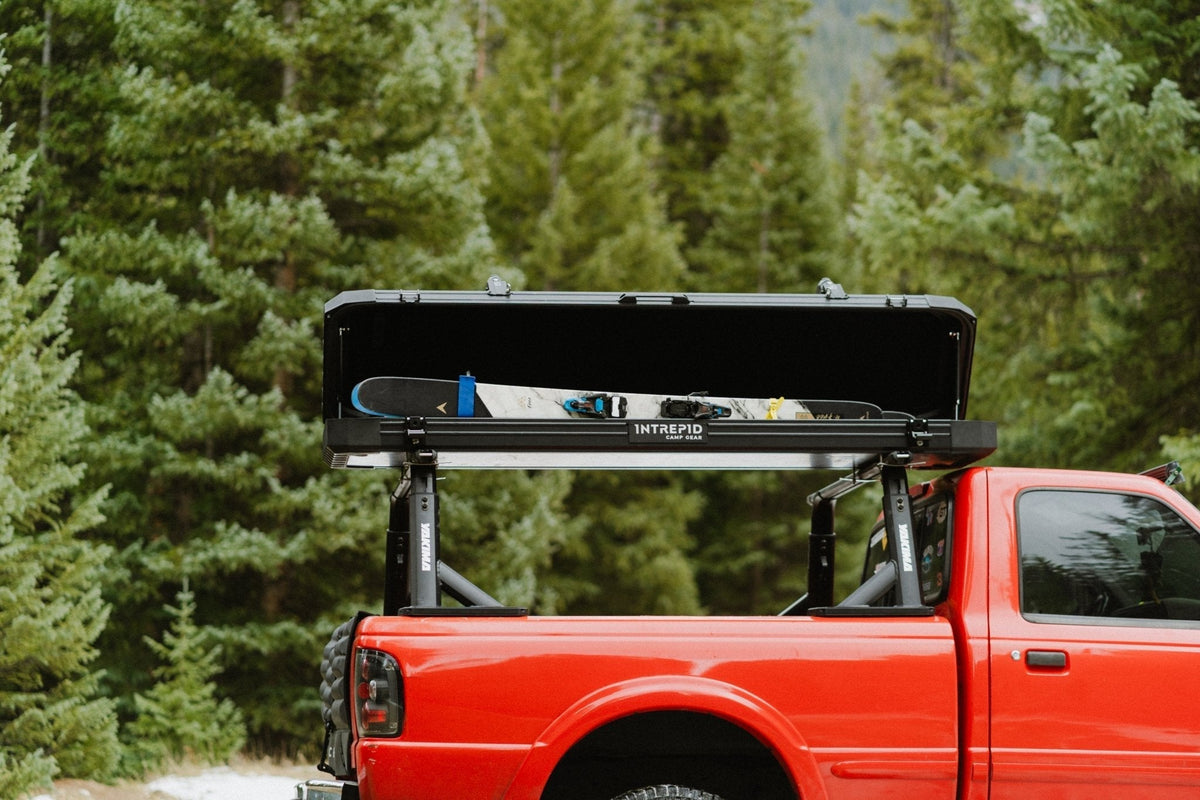
The Aluminum Cargo Box (ITX190)
For those who demand durability and a more rugged aesthetic, the aluminum cargo box is the gold standard. This category has grown significantly with the rise of overlanding. A prime example of this evolution is the ITX190, which represents the high-end of gear transport.
Unlike plastic shells, aluminum boxes like the ITX190 are built to take a beating. They offer a level of utility that plastic simply cannot match. Often times on newer trucks and SUV’s they often match the aesthetics of these vehicles better than a traditional plastic shell box.
The Pros:
- Unmatched Durability: Aluminum doesn't crack in the cold or fade in the sun. It handles tree branch strikes and rough handling with ease.
- Security: These are essentially safes for your roof. The metal construction and heavy-duty latches make them much harder to break into than plastic or rubber options.
- Versatility: Many aluminum boxes, including the ITX190, feature flat tops or mounting rails. This means you can mount other gear on top of the box, such as recovery boards or solar panels, maximizing your roof's real estate.
-
Low Profile: The ITX190 specifically is designed to be slim, reducing drag and keeping your center of gravity lower than tall plastic bubbles.
The Cons:
- Weight: Metal is heavier than plastic, which can make installation a two-person job.
-
Cost: Quality materials and manufacturing come with a higher price tag.
Best For: Serious adventurers, overlanders, and skiers who own high-end gear and want the ultimate in security, modularity, and durability.
Hitch-Mounted Racks
If you have a tall SUV and struggle to reach the roof, the hitch rack is an alternative worth considering. These slot into your trailer hitch and hold skis vertically behind the vehicle.
The Pros:
- Accessibility: Loading and unloading is effortless. No climbing on door sills or bringing a step stool.
- Aerodynamics: Because the skis are behind the car in the slipstream, there is almost no wind drag.
The Cons:
- The "Spray Zone": The back of a car creates a vacuum that sucks up road spray. Your skis will get incredibly dirty—even dirtier than on a roof clamp rack.
- Trunk Access: Unless you buy an expensive swing-away model, you cannot open your trunk while the rack is loaded.
- Length Issues: Your car becomes significantly longer, making parking in tight city spots difficult.
Best For: Short drivers with tall vehicles who prioritize ease of loading over gear cleanliness.
How to Choose the Right Ski Rack
Selecting the "best" rack depends entirely on your specific lifestyle. Here is a quick decision guide:
- If you are on a tight budget: Stick with the Clamp-Style. Just remember to rinse your bindings off after a salty drive.
- If you haul a family of four: Go with a Plastic Cargo Box. The extra space for helmets and boots is invaluable when every seat in the car is taken.
- If you want the best performance and protection: Choose an Aluminum Box like the ITX190. If you ski 50+ days a year or travel into the backcountry, the durability and security of an aluminum vault are worth the investment. It protects your expensive setup from both thieves and the elements while looking fantastic on a modern rig.
- If you can't reach your roof: A Hitch Rack is your only ergonomic choice, but buy a cover for your skis to keep the grime off.
Conclusion
The "best" ski rack is the one that gets you to the mountain with the least amount of hassle. While clamp racks have served us well for decades, the shift toward enclosed storage is undeniable. Whether you choose a standard plastic shell or upgrade to a premium aluminum option like the ITX190, getting your gear out of the car and onto the roof is the first step toward a better ski season.
Assess your budget, measure your garage clearance, and pick the system that protects your investment. The mountains are calling—make sure your gear is ready to answer.


Share: